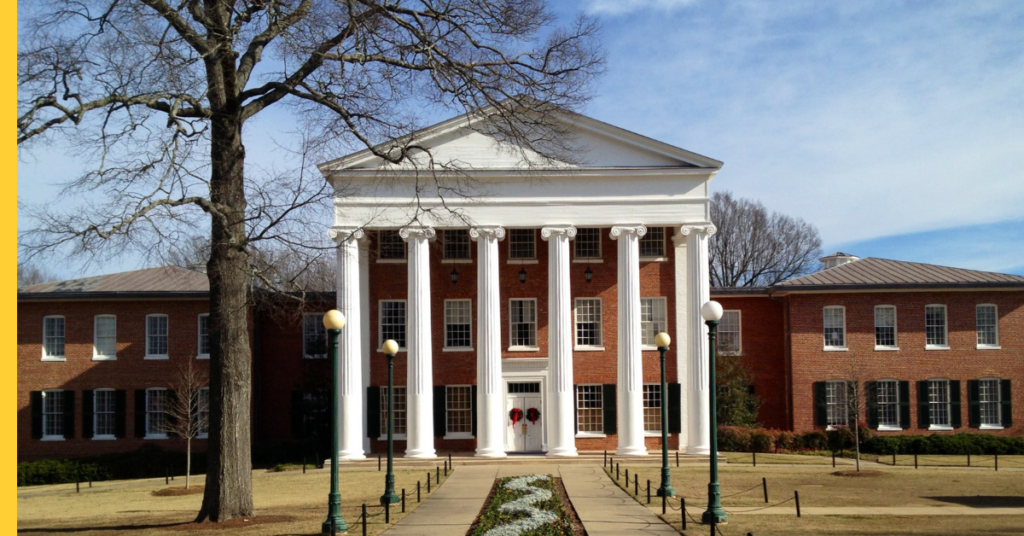
The University of Mississippi has approved a plan to launch its Center on Collegiate Gambling to study gambling at the college level.
The University of Mississippi has announced a plan to launch its Centre on Collegiate Gambling, marking what university officials said was the first endeavour of its kind in the US.
The new programme will look specifically at student gambling trends, including card games, sports betting, and prediction markets. The new centre is expected to launch as a research, prevention, and student support operation.
This is a narrower focus than that of other programmes, like the Centre for Gambling Studies (CGS) at Rutgers School of Social Work, which explore gambling trends across a wider range of age groups.
University officials said the new endeavour was a response to growing concerns over the prevalence of such activities.
The idea emerged about two years ago after a presentation on gambling trends was made to faculty members.
University of Mississippi associate professor of social work Daniel Durkin explained: “Around two years ago, we invited an expert on gambling to come speak to us and after his presentation, I became very alarmed. We were seeing a developing gambling problem, and not a whole lot of people were actually doing anything about it.”
This led to a sense of urgency among staff, who began making efforts behind the scenes before finally coming together as a task force comprising individuals from the fields of public health, law, education, and social work.
What began as a grassroots movement soon took the form of a formal effort, driven by a sense of a void in higher education research and response.
Gambling studies provide catalyst
Research conducted last spring helped shape the centre’s direction. The university explained that findings showed 39% of Mississippi college students reported gambling within the past year.
Comparable figures from North Carolina reached 58%. Of the students who participated in sports betting, 6% of those in Mississippi qualified as having a problem gambling condition, based on psychiatric guidelines cited by the University of Mississippi.
According to officials, the data served as the catalyst for developing a more formalised process. The centre will work on developing policies, education initiatives, and interventions.
Another goal is to assist state lawmakers as gambling-related legislation is constantly being written.
An integral component of this initiative is the training of counsellors to address gambling harm. Eight university counsellors have already undertaken a specific training course to help them better screen and treat gambling harm.
The approach aims to integrate gambling awareness into routine counselling services, where the issue has historically received limited attention.
The university is also collaborating with Emory University to explore screening methods within campus health systems.
The early projects will determine if it is possible to screen students for problems with gambling as part of their health checks, something that administrators believe could result in early interventions.
Faculty involved in the project said that some of the reasons students do not seek help is that they regard the problem of losing money to gambling as a financial issue rather than a behavioural problem.
A campus-wide initiative
Expanding awareness within health services is expected to help alleviate that disconnect.
The centre’s scope extends beyond students who gamble. It will also consider the implications for student-athletes, especially as betting activity increasingly intersects with college sports.
University officials cited examples of student-athletes who were subjected to harassment because of the outcome of betting activity, which led to concerns about their mental health and safety.
Another factor, which adds a unique dimension to the issue, centres on the culture of college sports in Mississippi. The state does not have a sports franchise in any of the major sports leagues.
As for the future, the university intends to implement a campus-wide approach by this autumn, in addition to other initiatives, which include an awareness week and a research conference focusing on collegiate gambling.
According to the university, the long-term goal is to address the issue before the students leave the campus, in order to prevent the continuation of gambling problems in adulthood.