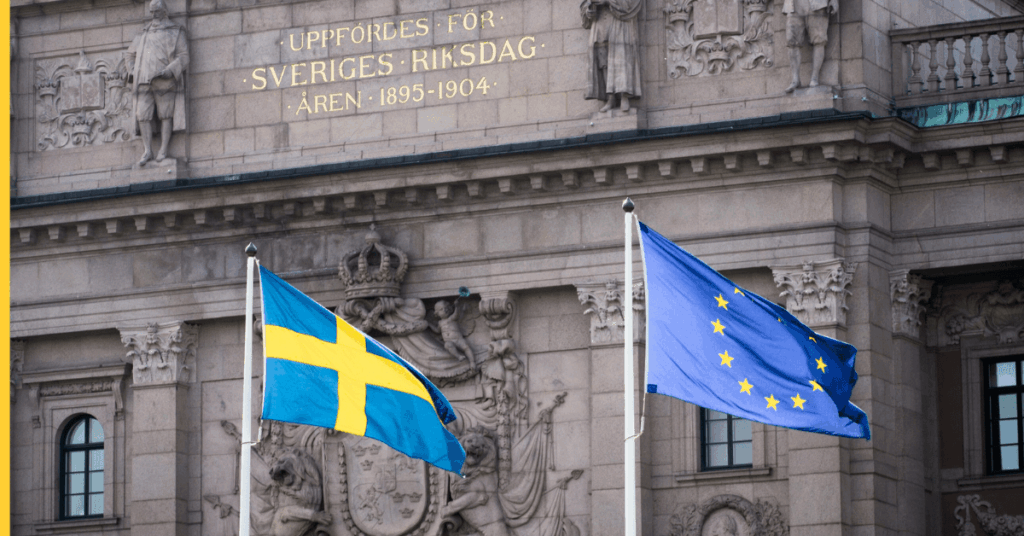
The Swedish Ministry of Health and Social Affairs has presented a bill proposing Sweden sign and ratify the Council of Europe’s Macolin Convention.
The convention, formally called the “Council of Europe Convention on the Manipulation of Sports Competitions,” is a landmark international agreement inked with the intention of combatting match-fixing in sports.
The proposal comes amid increased awareness in Sweden of the potential threats that match-fixing and corruption in sports present.
The Health Ministry said it sees participation in the agreement as instrumental in bringing Sweden’s anti-corruption efforts in line with those of other European states.
BOS calls for increased industry participation
Gustaf Hoffstedt, secretary general of the Industry Association for Online Gambling (BOS) in Sweden, has shown support for the country’s proposed signing of the convention.
However, Hoffstedt noted the importance of including private gaming companies in the collaborative framework. He pointed out that a majority of sports betting globally and in Europe is conducted through private or publicly listed gaming companies, not state-owned entities.
By excluding such companies from the convention’s working groups and decision-making bodies, Hoffstedt argued, the Council of Europe risks undermining a holistic approach to fighting match-fixing.
He therefore called upon Sweden to advocate for policy changes within the convention that would allow all licensed gaming companies access to these bodies, thus strengthening the collective fight against match-fixing.
Should Sweden decide to ratify the convention, it would join an expanding coalition of countries committed to standardising responses to match-fixing and ensuring fair sports competitions.
BOS has indicated that, alongside other industry stakeholders, it intends to press Swedish authorities to advocate for broader representation of private gaming companies within the Council of Europe’s decision-making structures.
Such inclusion, according to industry advocates, would enhance the effectiveness of anti-corruption measures by allowing for more diverse input and resource-sharing across the entire gambling sector.
For Sweden, home to a mix of state-owned and private gaming operators, green-lighting entry could help position it as a leader in advocating for a comprehensive, inclusive approach to protecting sports integrity at the European level.
Convention sets out unified goals
The Macolin Convention, first adopted in 2014 in Macolin, Switzerland, became the first international treaty focused exclusively on addressing the manipulation of sports competitions.
In the wake of several high-profile match-fixing scandals in the early 2010s, the convention was conceived to bolster cross-border cooperation, criminalise manipulative acts, and establish clear definitions and frameworks for legal cooperation.
Its primary goal is to harmonise legislation and actions among Council of Europe member states to protect sports integrity and ensure fair play across borders.
The convention encourages countries to enact laws that define and penalise match-fixing, establish national contact points to facilitate coordination, and foster partnerships between public authorities, sports organisations, and betting operators.
Among the key bodies established by the Macolin Convention is the Group of Copenhagen, which provides a forum for member states to coordinate efforts and exchange information on match-fixing prevention and detection. The Group of Copenhagen also has a Follow-up Committee, which monitors implementation of the convention and proposes strategies to enhance its impact.
Currently, access to these bodies is limited to state-owned gaming companies, a policy that has drawn criticism from the industry and stakeholders who argue that it restricts critical collaboration.
The private and listed gaming sector, which represents a significant share of the betting market in Europe, is not granted full access to these forums, sparking concerns that their lack of inclusion weakens efforts to effectively curb match-fixing.
Slow integration
The Convention has slowly gained traction among European countries, with Spain being the most recent country to sign and ratify it. In October, it became the 12th country to formalise its commitment to the convention.
The broader adoption of the agreement highlights the growing concern among European countries over the damaging effects of match-fixing on sports integrity and the betting industry. As international betting markets expand and online gambling becomes more accessible, the risk of manipulation continues to increase.
Member states of the Council of Europe are expected to benefit from the convention’s information-sharing protocols, as well as coordinated investigations enabled by the Group of Copenhagen and its Follow-up Committee.