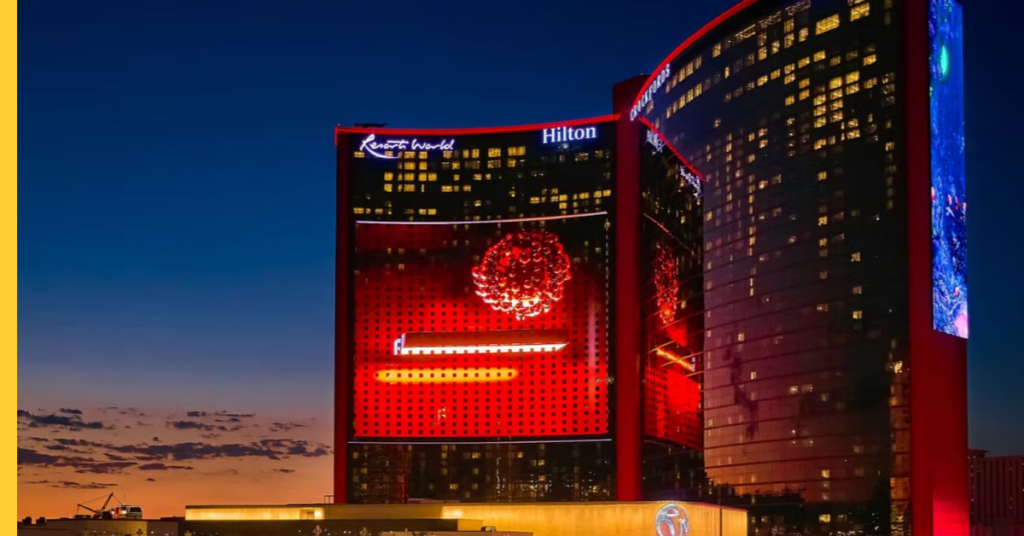
A new RICO lawsuit in Nevada accuses targets Resorts World Las Vegas for allegedly enabling illegal gambling and money laundering.
Resorts World Las Vegas is facing a new federal RICO lawsuit in Nevada that alleges former executives engaged in a years-long racketeering scheme that enabled illegal gambling, money laundering and retaliation against a cooperating federal witness.
The 95-page complaint was filed by high-stakes gambler and longtime FBI cooperator Robert J. Cipriani, and Las Vegas businessman James Russell.
According to the complaint, Cipriani previously supplied information to federal and state authorities about illegal bookmakers and suspected laundering activity involving Nevada casinos. Those disclosures, the filing argues, contributed to a series of investigations and regulatory actions that continue to reverberate through Nevada.
The suit outlines extensive alleged violations of the Racketeer Influenced and Corrupt Organisations Act (RICO) by casino leadership and associated figures. It names former Resorts World president Scott Sibella and prominent Las Vegas attorney David Chesnoff among the defendants.
Both are alleged to have participated in what plaintiffs describe as an association-in-fact enterprise that operated the casino with systemic disregard for federal and state gaming laws.
Chesnoff, identified in the filing as a former Resorts World vendor and a past appointee to President Donald Trump’s Homeland Security Advisory Council, is further tied to business entities that prosecutors claim were used to funnel criminal gambling proceeds.
Across multiple sections of the complaint, Sibella and Chesnoff are listed as participants in predicate acts involving money laundering, wilful failure to file required Suspicious Activity Reports, and witness tampering, spanning from 2021 through 2023.
The gambling controversy that won’t go away
The lawsuit draws on the Nevada Gaming Control Board’s prior investigation, which, according to the filing, found a pervasive lack of internal controls and an internal culture that minimised or ignored indicators of criminal activity.
Regulators ultimately fined Resorts World and its parent company Genting Berhad $10.5m earlier this year for systemic violations tied to anti-money laundering obligations.
The complaint asserts that several executives were removed as a condition of the settlement. The plaintiffs contend, however, that these reforms failed to address what they characterise as the casino’s inherent and structural compliance deficiencies.
Central to the complaint is the allegation that Resorts World leadership retaliated against Cipriani, who tried to sue Resorts World last year but failed, for providing information to federal and state authorities.
The filing details a series of events in late 2021, including what plaintiffs describe as a fabricated criminal case prompted by Sibella, Chesnoff, and others.
The suit argues these actions were meant to silence a key witness and obstruct ongoing federal inquiries into illegal gambling networks operating in Nevada and California.
It also references Sibella’s 2024 federal guilty plea for failing to file a suspicious activity report during his prior role at MGM Grand, citing it as part of a broader pattern of conduct.
Further, the lawsuit asserts that the alleged racketeering activity produced financial harm to both plaintiffs and facilitated criminal enterprises operating within Resorts World. It seeks monetary damages and injunctive relief.
Resorts World’s New York application progresses
While the defendants have not yet filed responses in court, the breadth of the allegations may impact the legal and regulatory landscape surrounding one of Las Vegas’s newest casino properties.
It places renewed onus on federal and state oversight bodies as the case proceeds. The suit also comes alongside a major development in Genting’s New York expansion efforts.
The company, along with Bally’s and Hard Rock, received backing this week by the New York State Gaming Facility Location Board (GFLB).
The board recommended Resorts World be given a licence, despite acknowledging that it had not been fully transparent in its application.
The GFLB pointed out specifically in its final report that the company omitted violations that “[resulted] in fines at Resorts World Catskills, Resorts World Hudson Valley, and its current video lottery gaming facility at Aqueduct.”
The Aqueduct property is the target of Resort World’s expansion plans.
It called the omission “concerning” and suggested to the New York Gaming Commission that this be a factor in its final licensing evaluation.