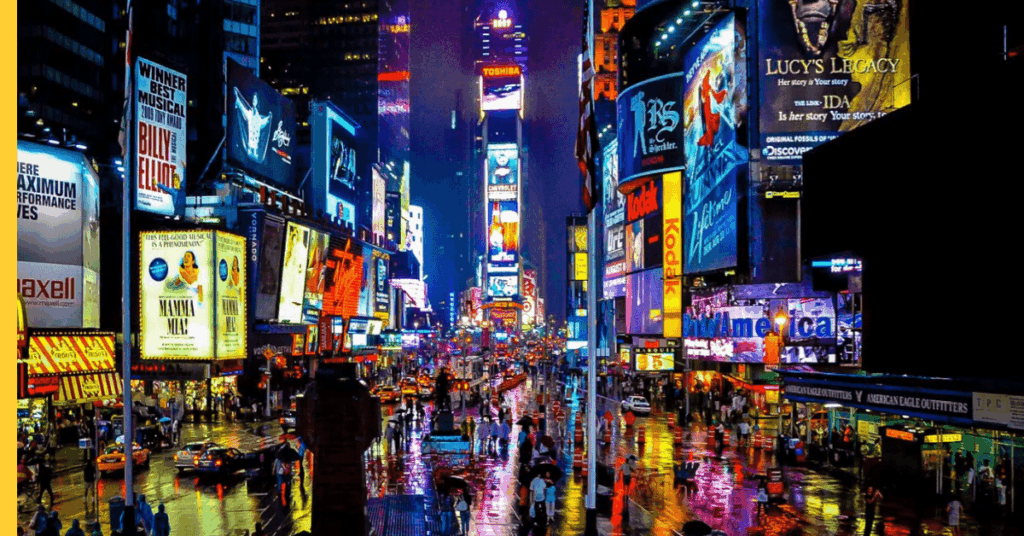
Two high-profile casino proposals in Manhattan, including the Times Square project backed by Caesars Entertainment and Jay-Z, have been eliminated from contention after local community advisory committees voted against them.
The decisions further narrow the remaining field of applicants competing for up to three new casino licences in the downstate region.
On Wednesday (17 September), both Caesars Palace Times Square and The Avenir project near Hudson Yards failed to secure enough support from their respective advisory panels.
The Caesars proposal, which would have redeveloped an office tower in Times Square into a major gambling and entertainment complex, lost by a four-to-two vote.
Its backers included Caesars, SL Green Realty, Roc Nation, and Live Nation, with Jay-Z tied to the project through Roc Nation.
Proponents had promised a $5.4bn investment, thousands of permanent jobs, and funding for local initiatives such as a civil rights museum.
Despite those pledges, opposition from Broadway theatre groups and local representatives proved decisive.
Following the vote, SL Green Realty chairman Marc Holliday sharply criticised the outcome, claiming the decision deprived the community and state of economic and cultural benefits.
The defeat marked the end of a campaign that had invested heavily in gaining resident support but ultimately failed to overcome entrenched concerns about traffic, safety, and neighbourhood impact.
The Avenir fails to make the grade
Meanwhile the Avenir project, led by Silverstein Properties, envisioned a $7bn mixed-use development near the Javits Center on Manhattan’s West Side.
Plans included a 1,000-room hotel, a casino and affordable housing units, with the proposal projected to create 4,000 full-time jobs and 1,000 part-time positions.
However, its Community Advisory Committee also voted four-to-two against moving forward.
Silverstein Properties executives expressed frustration that the vote proceeded at this point despite their request for more time.
The firm said committee members had requested a late amendment to the proposal just hours before the meeting, leaving insufficient opportunity for further deliberation.
Mayor Eric Adams’ representative on the panel, Nabeela Malik, voted in favour but voiced concerns about the premature timing of the vote.
Still, longtime political figures such as former Assemblymember Richard Gottfried argued that the review process had been lengthy and transparent enough to justify moving ahead.
With these rejections, both Manhattan proposals lose any path toward licensure, since state law requires local committee approval before an application can be forwarded to the New York State Gaming Commission’s Facility Location Board.
That board will ultimately decide which projects receive licences, with final determinations expected by year’s end.
Citi Field, MGM casinos still in play
Attention has now shifted to Queens and Yonkers, where two major proposals continue to generate debate.
Also on Tuesday, public hearings were held for Metropolitan Park, backed by Mets owner Steve Cohen, and MGM Empire City, which currently operates in Yonkers as a video lottery terminal facility.
Cohen’s Metropolitan Park plan envisions transforming Citi Field’s parking lots into an $8bn entertainment district featuring a casino, hotel, new venues, and 25 acres of public parkland.
Supporters, including the Queens Chamber of Commerce, argued the project would stimulate business growth and provide cultural amenities.
Critics, however, warned against the concentration of power in the hands of a single developer and raised concerns about community representation.
Meanwhile, MGM Empire City presented a $2.3bn renovation strategy to convert its existing racetrack-adjacent site into a full casino with expanded gaming and entertainment spaces.
MGM has operated in Yonkers since 2006 under a restricted licence and insists that full authorisation is necessary to remain competitive.
At the hearing, Yonkers Mayor Mike Spano and dozens of MGM employees warned that without the upgrade, thousands of jobs could be at risk.
The battle rages
Both projects are considered strong contenders for licensing. MGM holds the advantage of an established presence and workforce, while Cohen’s Metropolitan Park offers substantial financial backing and a broad redevelopment vision.
The casino licensing process, which has spanned several years, has highlighted the inherent tension between large-scale economic development and local community resistance.
While developers frame their projects as opportunities for growth, jobs, and public investment, opponents argue that gambling facilities can exacerbate traffic congestion, reshape neighbourhoods in disruptive ways, and divert attention from other civic priorities.
Six proposals remain under consideration, including Bally’s bid for a licence in the Bronx, Thor Equities’ Coney Island plan, and Soloviev Group’s Freedom Plaza concept on Manhattan’s East Side.
Resorts World in Queens is also seeking a full casino licence.
The Gaming Commission’s decision later this year will determine the future of downstate casino development, with billions in investment and thousands of jobs hanging in the balance.