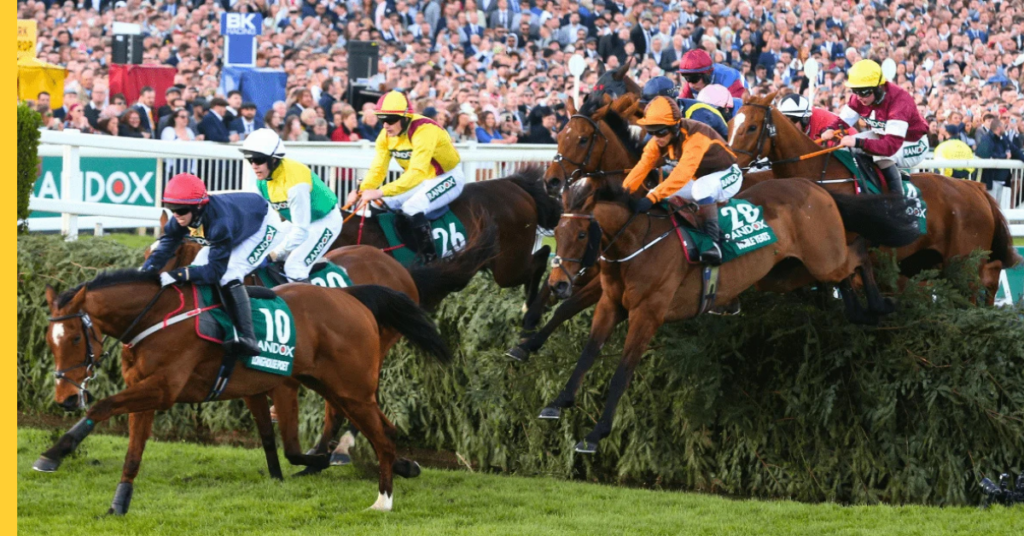
The BGC reports that the British unlicensed betting sector processed up to £100m in total wagers in relation to the Grand National.
The unlicensed betting sector in Britain may have processed up to £100m in wagers related to the Grand National at Aintree, according to recent statistics provided by the Betting and Gaming Council (BGC).
Up to £40m was estimated to have been wagered outside the licensed market on the main race.
The Grand National is one of the biggest betting events in Britain’s sporting calendar, attracting millions of bettors each year.
The BGC said the scale of possible black-market activity during the meeting shows how criminal bookmakers continue to exploit marquee events.
It further used the Grand National figures to argue that pressure on licensed operators is on the rise, an assertion backed up by previous studies on UK betting.
It said higher operating costs and the prospect of more intrusive affordability checks could make the legal sector less competitive, pushing some bettors to move toward unregulated alternatives.
The organisation has always held that forcing individuals to reveal their extensive personal financial details through affordability checks might discourage them from taking part in the controlled betting market.
According to BGC CEO Grainne Hurst, policymakers should ensure that bettors stay within the regulated market where safeguards exist, rather than allowing them to engage in the illegal market. Increased oversight and forceful regulations are leading to the latter.
Black market gambling avoids economic contributions
The BGC was able to associate the issue with the overall economic impact of the gambling and betting sector in terms of economic contribution.
It pointed out that the gambling industry provides for over 109,000 job opportunities and contributes an annual £6.8bn to the economy of Britain in addition to generating £4bn in taxes.
The Grand National estimate adds to an ongoing industry campaign over black-market gambling in Britain. The BGC said enforcement against criminal groups behind illegal betting operations should remain a priority for policymakers and regulators.
Its argument is that major events such as the Aintree festival show how quickly illegal operators can try to capture demand when public interest in betting surges, while offering none of the standards applied to the licensed market.
With reference to data from October 2025 through today, there has been a significant rise in unlawful betting operations within the UK.
Trends indicate that what was once considered an outlier behaviour is now gradually creeping into the mainstream.
According to a report published by the Campaign for Fairer Gambling, working together with Yield Sec in January 2026, it has been estimated that the unlicensed operators constitute about 9% of the total £8.2bn online gambling market in the country.
Black market gambling not slowing down
Illegal sports streaming is functioning as a distribution channel. During the first half of 2025, UK viewers generated around 1.6 billion engaged views on illicit streams.
The overwhelming majority of those feeds, approximately nine in 10, carried promotions for unlicensed betting platforms.
That overlap gives offshore operators a clear route around formal advertising restrictions, landing directly in front of fans already priced out of legitimate subscriptions.
The risks are not abstract either. A large portion of these sites double as traps, with security reviews finding malware or data-harvesting features embedded across most of them.
There is also a more calculated layer to this growth. Unregulated platforms in many cases are hunting specific vulnerable users.
A number of individuals enrolled in the Gamstop self-exclusion scheme are being quietly redirected through search results and social media funnels, according to different studies.
Some put the figure at more than 400,000 people, despite them having chosen to block themselves from licensed operators.
Locked out of the regulated market, they become easy targets for sites that operate without safeguards. The spillover is visible even during major broadcasts.
On opening weekend coverage tied to the Premier League, close to 10% of detected gambling-related messaging traced back to unlicensed brands, slipping past the UK’s whistle-to-whistle ad restrictions with little resistance.