
20 BEST WAYS FOR FIRE EXTINGUISHER SERVICING AND PAT TESTING IN SOLIHULL
The Top 10 Tips To Test Equipment For PAT in Solihull
The UK Portable Appliance Testing Program (PAT), which is a compliance-based system is based on the use proper calibration, calibration, and use of testing equipment. While the expertise of the technician is paramount the ability of their technician to conduct precise and reliable safety tests is entirely dependent on the high-quality as well as the calibration and application of their test instruments. Test instruments must be able to conduct electrical tests as specified by the IET Code of Practice for Inspection and Testing of Electric Equipment in Service which is considered the industry standard. Every tool, from the sophisticated test equipment for appliances to simple voltage indicator, plays an important role in ensuring the safety of electrical equipment. Understanding the limitations, capabilities and legal requirements that surround the equipment is essential for dutyholders who want to ensure that the testing regime they use is not only safe and legal but also legally defensible.
1. Portable Appliance Tester Tester in Solihull
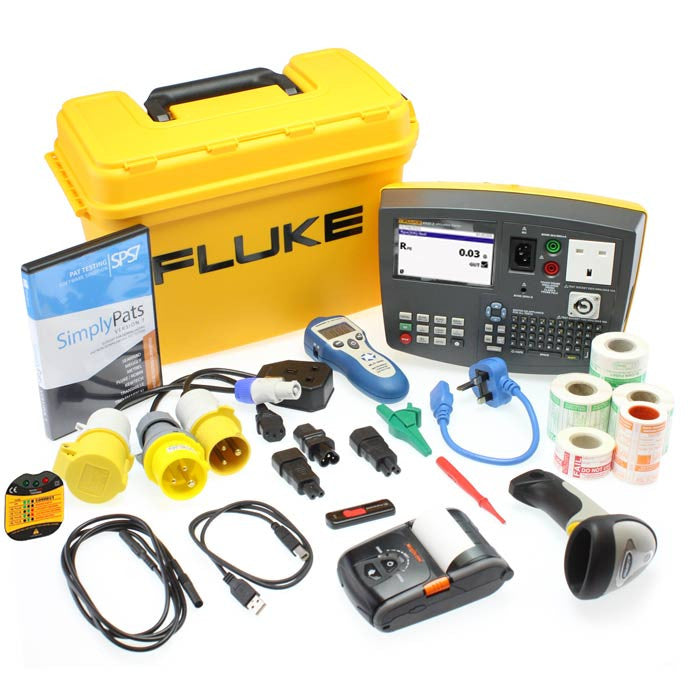
It is a primary device, an automated safety test instrument. Modern testers are available in a range of models, from the basic ones that carry out earth continuity, insulation resistance, and lead polarity tests as well as more sophisticated models that offer additional tests like load/run currents the leakage of earth and touch currents. It is crucial that testers are able to carry out leakage tests, or soft tests on electronic equipment that is sensitive components like printers and computers. This can protect against damage caused by the high voltages utilized in traditional tests for insulation resistance. The test instrument chosen must be compatible with the requirements of the appliance to be test.
2. Calibrations are required annually by accredited UKAS laboratories. in Solihull
It is a must to ensure compliance and diligence. The PAT tester has to be calibrated at regular intervals typically every year, by a laboratory accredited by the United Kingdom Accreditation Service (UKAS). The calibration ensures that the measurements taken by the device are precise and can be traced back to the standards of the nation. Each tester must be accompanied by an authentic certification of calibration. The use of an out-of calibration or non-calibrated instrument invalidates all test results and leaves no recourse in the event in the event of an accident.
3. Functionality and Daily/Pre-Use User Checks as well as Functionality Validation
The technician is required to conduct daily functional checks, that are commonly referred to as "user checks" or "verification tests" prior to starting any tests. This is typically done by conducting a test with a "proof load" (or set of test leads) that has been confirmed to be good. If the tester returns results that are not typical to be expected for this "known-good" product, it may be a problem in the test. This tester should not then be used until it has had calibration and service. This easy test will ensure that the device is operating correctly on the date of use.
4. The crucial role of visual Inspection Equipment in Solihull
The tools required for a thorough inspection even though they are often ignored by testers, are equally important. These tools include screwdrivers for dismantling plugs, labels, or labels pre-printed to indicate the asset, and an inspection light to illuminate dark areas. This is where the majority of faults are discovered. By skimping on this step, you undermine your entire testing process.
5. Specialised Test Leads and Adapters in Solihull
A technician who is competent has a full set of adaptors and test leads to connect with any kind outlet for appliances. This includes regular UK 3 pin plug leads, IEC led adaptors(for testing the appliance-end of detachable cables) as well as a clamshell/croc clip lead for testing equipment with no plug (e.g. Industrial machinery) and adaptors specifically designed for commando connectors for shaver sockets, or IEC 60309 connectors. A failure to connect correctly could result in tests not being conducted or skipped.
6. Earth Bond Test Lead and its significance for Class I Equipment
The test for earth bond is essential for the safety of Class I appliances (those which require an earth to ensure safety). The test lead should be able to withstand the current of a significant amount (typically between 5 and 25 A) to ensure a secure connection with the earth circuit. A lead of low quality or that is not suitable for the test may cause an incorrect "pass" result. This could pose the risk of a serious safety hazard. Technicians should be aware of using the correct lead for this particular test.
7. Resistance to Insulation Parameters and Voltage Tests
The resistance to insulation is measured using an DC voltage with high intensity (typically 500V for most appliances) that is applied between the conductors that are live as well as the earth. The technician must be able determine the right time and place to stay clear of this test. For example, on devices with surge protectors (or sensitive electronics) it is recommended to use a different leakage testing is more safe. The equipment has to be able to provide the correct test voltage as stated in the IET Code of Practice.
8. Presets, Pass/Fail Criteria and Instruments in Solihull
The most reliable testers of PAT come with built-in criteria to determine if they pass or fail according to the limits set in the IET Code. (e.g. Earth bond resistance 0.1O+R or Insulation resistance greater than 1MO). Transparency is attained when the technician knows the limits set by the manufacturer. They should not alter them in order to ensure the desired result. The technician should be able to confirm that their equipment is set to these industry-standard thresholds, ensuring consistent and justified outcomes.
9. Data Management and Reporting features in Solihull
Modern PAT testers are data loggers. They can store thousands or hundreds of test data. These can be uploaded to software for certificates, asset lists and generation of failure reports. A transparent provider will use this function to present transparent, precise evidence of the work completed. Paper-based manual recording isn't the best practice in the industry and is vulnerable to mistakes, falsification, or loss.
10. Secondary Verification: Voltage Indicators and GS38 in Solihull
The PAT tester may be the primary tool however a technician with required skills will have a separate voltage gauge, or voltstick to ensure that the electrical connection is in good condition, particularly when changing the plug or looking into the cause of an issue. The HSE Guidance Note, GS38, outlines the design requirements for finger guards, insulated electrodes, and suitable current fuses. This is a vital layer of security for the person who is conducting the test. View the best electrical equipment testing in Solihull for blog advice.
Ten Tips On The Top Solihulls To Service Fire Extinguishers in Solihull
The geographic Solihull and the coverage offered by the provider of your fire extinguisher can affect the reliability, price and quality of service. The UK where the Regulatory Reform Order 2005 (Fire Safety) requires constant and timely maintenance, a service company's physical and logistical capabilities have a direct influence on the way they can fulfill their contractual obligations as well as legal obligations. If you are deciding between a national company that offers broad coverage as well as local specialists who have extensive knowledge of the region and experience, you must look at factors such as response times, travel costs and cultural understanding. A provider's operational footprint–their depot Solihulls, engineer distribution, and territory management–determines whether they can offer genuine rapid response or merely theoretical coverage, making this a critical factor in ensuring your premises remain protected and compliant without suffering from excessive downtime or hidden charges related to geographic constraints.
1. Local vs. National. local provider operating models
In the UK market, you'll see large national firms and smaller localized specialists. National providers usually operate via regional depots and a distributed engineer network, which provides consistent branding and the resources needed to manage large, multi-site contracts across the country. Flexible backup systems and scalability are their main advantages. Local providers provide a very quick response time within their primary area as well as a better knowledge of the particular region (e.g. Southeast Scotland). They also offer customised services. It is crucial to determine whether you are dealing with a "national" company really has a presence within your particular region or if your postcode is in the fringe of their coverage. This can lead to longer response times and higher cost for mileage.
2. Engineer Density and Proximity to Your Postcode
In order to provide a practical service that is practical, having a local engineer who is permanently stationed and fully equipped for your Solihull is essential. The service provider may claim to cover the UK however it's useless if its nearest engineer is two hours away. You should ask: "Where are you located relative to the postcode we have?" Ask "How Many Engineers are there in my Geographic Area?" A high density of engineers in a particular region can result in less travel time, speedier emergency response, and less cancellations of appointments because of unexpected delays or problems with work elsewhere.
3. The mileage policy and call-out fees in Solihull
Mileage policies directly impact cost. Transparent providers will detail their policy in the quotation. A lot of companies offer a certain amount of "free' miles from their base or a nearby depot. Beyond this threshold, a per-mile charge is added. These costs can be excessive for remote or rural areas, like rural Wales and the Scottish Highlands. These expenses can be significant which is why it is crucial to receive a written estimation based upon your exact Solihull. Local providers may not charge for mileage within their core counties, giving businesses in the area a cost-saving advantage.
4. Regional Compliance Nuances and Regulations
There are significant differences between the laws governing fire safety in Great Britain. England and Wales are governed by the Regulatory reform (Fire Safety) Order 2005. Scotland is governed by the Fire (Scotland) Act of 2005, as well as its regulations. They can differ in the way they approach enforcement and documentation. Northern Ireland has its own separate legislation. These providers will have office staff and engineers who are knowledgeable and well-trained in regional nuances.
5. Multi-Site Contract Management and National Account Coordination in Solihull
The capability of a service provider to offer seamless coordination of national accounts for companies with multiple Solihulls within the UK is crucial. This calls for a centralised account management team working in conjunction with a synchronised network of regional engineers. The service provider should demonstrate a sophisticated scheduling and communications platform that guarantees consistency in service delivery, uniform pricing, and unifying reporting. All from a single point of contact regardless of whether your sites are in London, Manchester, or Glasgow. This removes the administrative headache that comes with managing multiple contracts.
6. Warehouse Infrastructure, including Depot and Warehouse Infrastructure in Solihull
The physical infrastructure of a company is a key indicator of their capability to deliver services. Local depots serve as vital logistical hubs for stocking extinguishers that are replaced. Engineers who live near a depot that is well-stocked are able to swiftly replenish and address a variety of issues within the first visit. If a company is in your area, but their closest warehouse is located hundreds of miles away, the engineers might not have the parts they require on their van, which could lead to delayed resolutions and repeat visits to complete straightforward tasks.
7. Plan for contingencies and engineer redundancy in Solihull
To ensure a comprehensive coverage, contingency plans are necessary for sickness or annual leave, as well as unexpected needs. A service provider that has limited coverage in your area could have one engineer who is accountable for a wide geographical area. If there is an unavailability, a service engineer could have to travel a considerable distance or delay your scheduled services. This can result in the quality being compromised. A technician in every region of the service provider is redundant. This will help you to avoid inconsistencies due to their internal resourcing.
8. Urban vs. Rural Service Challenges
The practicalities to service are very different between urban and country Solihulls. The process of servicing offices in Central London can be costly and difficult because of congestion charges in London, ULEZ compliance and the lack of parking. Rural areas face a myriad of challenges, including longer travel times as well as limited access for engineers who are updating their job status. If you choose a provider that has worked in your Solihull, they will be able to provide customized pricing and procedures.
9. Verification of the Coverage Claim by reference to the Client the Coverage Claim in Solihull
Check the coverage offered by the service provider. Contacting the references in your area or town is the most efficient method of obtaining testimonials from clients. A local business that is similar to yours regarding the service they received will give you an impression of what the company is like. Did they respond quickly? Did the engineer live near you? Was there an unexpected cost for mileage? This due diligence provides actual evidence to back (or challenge) the claim of the provider's capabilities in your region.
10. Contractual Guarantees Tied to Geographic Performance in Solihull
In the end, any coverage guarantee should be backed by the terms of the contract. The Service Level Agreement should include measures for performance in the geographic area. For instance, the SLA can guarantee that a scheduled maintenance service will be performed by an engineer located in a specific area or guarantee that an emergency callout will be answered within a certain timeframe from an identified local depot. Including these geographically specific KPIs in the contract formally establishes the claims of coverage made by the provider and provides recourse if the actual performance and presence are not in line with the promises they made. View the recommended fire safety in Solihull for website tips.