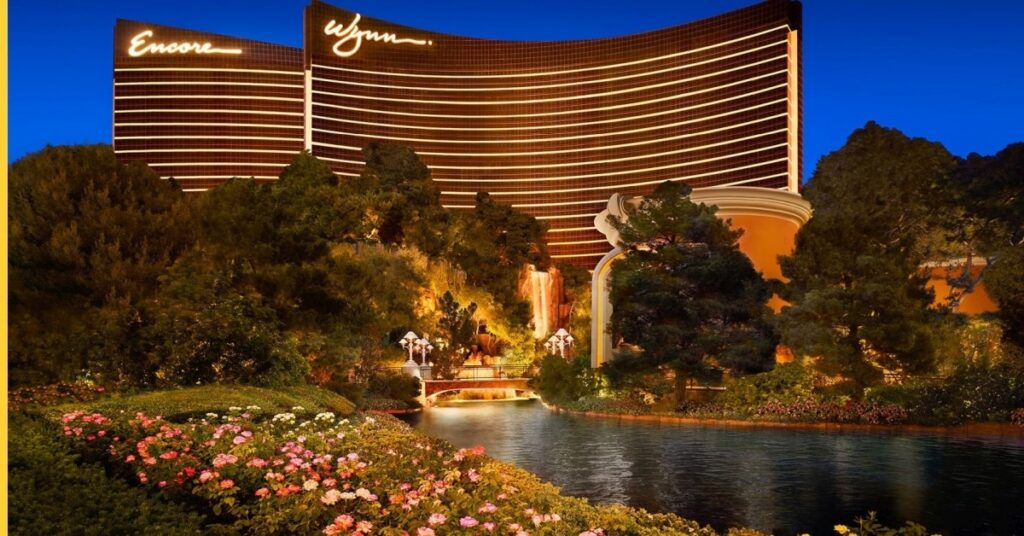
Wynn Resorts has officially withdrawn from the race for one of three downstate New York casino licences, becoming the third company to abandon such plans.
The announcement was made on Monday (19 May), with the company citing prohibitive rezoning challenges and persistent political resistance as key factors behind its decision.
The decision marks a shift in the state’s highly competitive casino licensing process, which has drawn interest from some of the largest names in the global gaming industry.
Wynn had been pursuing a licence in partnership with real estate firm Related Companies, with a proposal to build a sprawling integrated resort in Manhattan’s Hudson Yards neighbourhood.
The proposed development would have included a five-floor casino within a towering 80-story, 1,189-foot skyscraper.
Also planned were a 1,750-room hotel, a conference centre, retail space, and two additional high-rises — one a 1,366-foot office tower with an elementary school, and the other a 1,172-foot residential tower containing 1,500 homes.
According to Wynn’s statement, the company recognised that the political headwinds and complexities of the zoning process would make moving forward with the project increasingly difficult.
The release acknowledged “years of persistent opposition,” indicating that community and political resistance had made the project untenable, despite substantial financial and planning commitments.
Wynn did not indicate whether attempts to legalise online casinos in the state played a role in the decision.
Wynn to lose well-placed support
Supporters of the now-abandoned Hudson Yards project included high-profile figures.
Among them were New York State Building and Construction Trades Council President Gary LaBarbera, former NYC Council Speaker Christine Quinn, National Urban League President Marc Morial, and NAACP New York State Conference President Hazel Dukes.
Proponents emphasised the project’s economic impact, which was estimated to create 35,000 temporary construction jobs and 5,000 permanent union jobs.
Wynn’s exit follows a similar move by Las Vegas Sands, which pulled its own proposal in April.
Sands had been focused on a site at the Nassau Coliseum in Long Island, but cited uncertainties around the potential legalisation of iGaming in New York as a risk to its investment.
The company is now seeking a third-party partner to take over the bid, with the effort reportedly having cost tens of millions of dollars and several years of planning.
Saks Fifth Avenue also ended its pursuit of a casino earlier in April, withdrawing a proposal that would have added a gambling venue within its flagship Manhattan store.
The difficulties faced by potential operators reportedly stem less from the quality of the proposals, and more from a state licensing process that is described as increasingly politicised, opaque, and expensive.
Executives from multiple casino firms have privately voiced concerns that the timeline for awarding licences remains unclear and that political influence plays an outsized role in shaping outcomes.
Attrition leaves shrinking field
The field of serious contenders is narrowing. MGM Resorts and Resorts World, owned by Genting Group, are widely seen as front-runners for two of the three licences, due to their existing operations in Yonkers and Queens, respectively.
Both currently operate slot machine-only venues and are expected to receive approvals to expand into full casino offerings with live table games.
Among the remaining active proposals, several high-profile bids are still under review. Steve Cohen, the billionaire owner of the New York Mets, is working with Hard Rock International to develop a casino near Citi Field.
The $8bn proposal would redevelop 50 acres of parkland, currently including a stadium parking lot, into a large-scale entertainment complex.
The site would feature a Hard Rock-branded hotel with 2,300 rooms, a concert venue, park space, athletic fields, and a food hall.
An estimated 23,000 construction and permanent union jobs are projected to result from the build.
In Times Square, Caesars Entertainment is leading another major bid in partnership with SL Green and Roc Nation.
Their plan outlines a $4bn casino project housed in a high-rise that would include a 250,000-square-foot gaming space spread across eight floors, a 950-room hotel, and multiple dining venues.
The development is projected to bring in 6,000 construction jobs and draw millions of tourists annually to one of the most recognisable locations in the world.
The competitive process for awarding the three downstate licences was expected to culminate in 2024, but delays related to site evaluations, local political negotiations, and community input requirements have pushed decisions further into the future.
Many potential developers now view the process as increasingly prohibitive due to both direct political opposition and the high cost of navigating zoning, legal, and community engagement requirements.