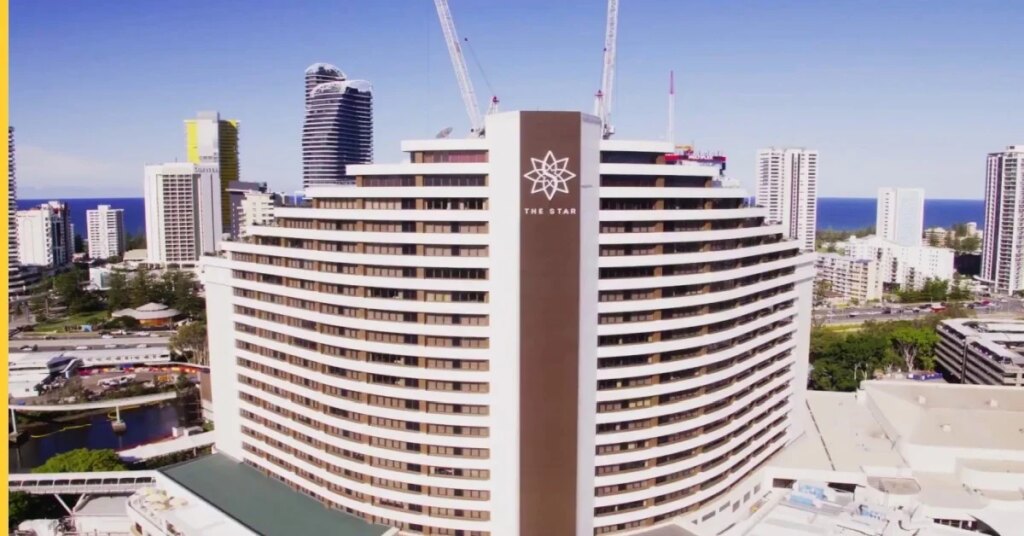
Star Entertainment Group continues to face potential insolvency as it encounters trouble raising funds to stay afloat.
Star Entertainment Group is facing a financial crisis that could potentially push it into administration as it struggles to secure necessary funding.
The operator was due to release its half-year financial report for the period between July and December today (28 February), but failed to do so within the stipulated deadline.
Under corporate regulations, a company must confirm its status as a going concern before publishing its financial results, meaning it must prove that it has the resources to sustain operations and meet its obligations.
Given Star’s precarious financial situation, the report was not released, and the company went into a temporary trading halt.
The Australian casino operator has recently encountered severe liquidity issues, preventing it from publishing its mid-year financial results on time.
Star’s ability to continue operations now depends on securing a financial lifeline, with its future hanging in the balance amid disagreements between prospective investor Oaktree Capital and the New South Wales (NSW) government.
Trading suspension on the table
Failure to publish the report on time means trading in Star’s shares would be automatically suspended when the Australian Securities Exchange (ASX) reopens on Monday 3 March.
One of the key proposals under consideration is a A$650m rescue deal from American asset management firm Oaktree Capital.
However, this deal has been complicated by Oaktree’s demand for rights over the property where the Star Casino in Sydney is located.
The land is owned by the NSW Government, and media reports suggest that the government is unwilling to relinquish control.
Sky News Australia business editor Ross Greenwood noted that the NSW Government would rather let Star go into administration than grant Oaktree’s request.
If Star collapses, the government would instead negotiate directly with administrators to determine the casino’s future.
Star’s potential administration could have significant consequences for its 8,000 employees, with the possibility they might end up relying on government support through a wages guarantee scheme.
Greenwood also mentioned that the Queensland Government, which oversees Star’s operations in Brisbane and the Gold Coast, would play a role in determining the company’s fate.
However, he dismissed the possibility of a federal bailout, comparing the situation to that of the Whyalla Steelworks, which received government support in a similar financial crisis.
If Star does enter administration, it is expected that its casino operations could still continue under an exemption granted to administrators.
This would allow the gaming floors to remain operational until the business is either restructured or sold to new owners.
However, any potential buyer would have to be vetted and approved by the NSW gaming regulator before being allowed to take over operations.
AUSTRAC still reviewing Star’s operations
Adding further to Star’s troubles is an anticipated massive fine from the Australian Transaction Reports and Analysis Centre (AUSTRAC) due to breaches of anti-money laundering laws.
The penalty could be as high as A$400m, a figure that would place additional financial strain on the already struggling company.
Any prospective investor or buyer would have to consider this liability when evaluating the company’s value and future prospects.
The uncertainty surrounding Star’s financial health has already had a significant impact on its stock price. Today, the company’s shares fell by approximately 15%, reflecting investors’ growing concerns about its ability to stay afloat.
This is the second time in six months that Star has gone into a trading halt due to financial instability.
Despite the company’s attempts to secure emergency funding, there is no guarantee that a solution will be found in time. Star had indicated that it expected to receive “one or more” liquidity proposals, but the specifics of these proposals remain unclear.
Whether the proposals will be enough to demonstrate that Star can continue as a going concern remains to be seen.
If Star ultimately fails to secure the necessary funding, the administration process will be the next step.
At that point, control of the company would shift to appointed administrators who would manage its assets, negotiate with creditors, and explore potential restructuring or sale options.