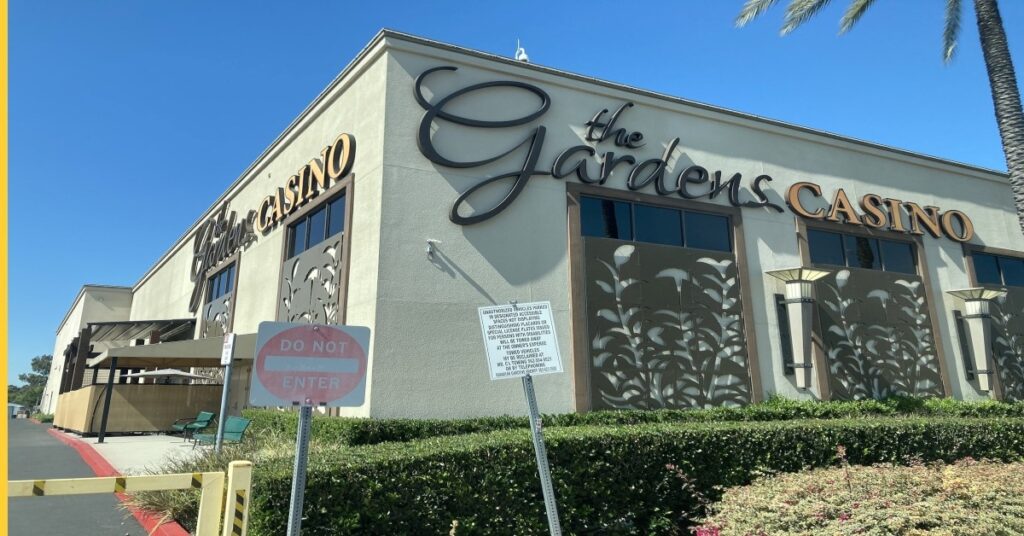
California’s tribes are suing the state’s cardrooms, taking advantage of a new law giving them the power to sue over illegal gambling.
Seven casino-owning Native Indian tribes filed a lawsuit against dozens of the state’s cardrooms as the new year rolled around, taking advantage of new legislation implemented last year.
The lawsuit, filed in Sacramento County Superior Court, alleges that these privately owned gambling establishments are offering illegal card games such as blackjack and poker, encroaching on the tribes’ exclusive rights to operate these games.
This legal action is the first of its kind under Senate Bill 549, a new law signed by Governor Gavin Newsom in September that took effect on January 1.
The law grants tribes a limited three-month window to challenge cardrooms over disputed games. Prior to this, the tribes, as sovereign entities, lacked the legal standing to sue private gambling establishments.
The lawsuit argues that these games undermine tribal casinos, which rely heavily on table games to fund community programs, infrastructure, and economic development for historically marginalised Native American populations.
Clash over state gambling rights
For years, tribes have claimed that California voters granted them exclusive rights to operate certain table games under state gaming compacts. Cardrooms, however, maintain that their operations fully comply with the law, noting that the state attorney general has consistently approved the games in question.
A spokesperson for the cardroom industry dismissed the tribes’ allegations, stating that cardrooms are “lawful, tax-paying businesses” and that this lawsuit is an attempt by tribal casinos to stifle competition.
The stakes are substantial. Cardrooms contribute millions in tax revenue to cities across California, funding essential services like police, firefighters, and road maintenance.
Some cities, such as Hawaiian Gardens and Commerce in Los Angeles County, depend on these revenues for nearly half of their budgets.
Impacts on local communities
The potential implications of the lawsuit have raised alarm among city officials. In San Jose, for example, cardrooms contribute $30m annually to the city’s budget—enough to support the salaries of 150 police officers or 133 firefighters.
Local leaders fear that a court ruling in favour of the tribes could jeopardise funding for critical services.
For smaller cities, the financial impact could be even more dire. Hawaiian Gardens, where cardroom revenue constitutes about two-thirds of the city budget, would face significant challenges maintaining municipal services if the disputed games are outlawed.
A political showdown
The lawsuit comes in the wake of one of the most contentious political battles of the past year. The passage of SB 549 followed intense lobbying efforts from both sides, with tribal interests and cardrooms collectively spending millions of dollars to sway lawmakers.
A bipartisan coalition of legislators, many representing districts with large tribal casinos, championed the bill. Meanwhile, lawmakers with cardrooms in their districts pushed back, citing the economic risks to their communities.
In the lead-up to the law’s passage, cardrooms mounted a massive lobbying campaign. Hawaiian Gardens Casino, according to data collected by Cal Matters, spent $9.1m on lobbying. This made it the second-highest lobbying spender in the state, surpassed only by Chevron Corporation.
Even after the bill’s passage, tensions remained high. In a retaliatory move, the cardroom industry poured over $3m into campaigns opposing four lawmakers who supported the bill, including its author, Senator Josh Newman of Fullerton.
Newman was among three lawmakers targeted by cardroom-backed efforts who ultimately lost their reelection bids.
Under SB 549, the tribes are not seeking monetary damages or attorneys’ fees. Instead, the lawsuit focuses solely on the legality of the cardrooms’ games.
A ruling in favour of the tribes could force the cardrooms to cease offering certain games, effectively reshaping the state’s gambling industry and potentially upending local budgets.