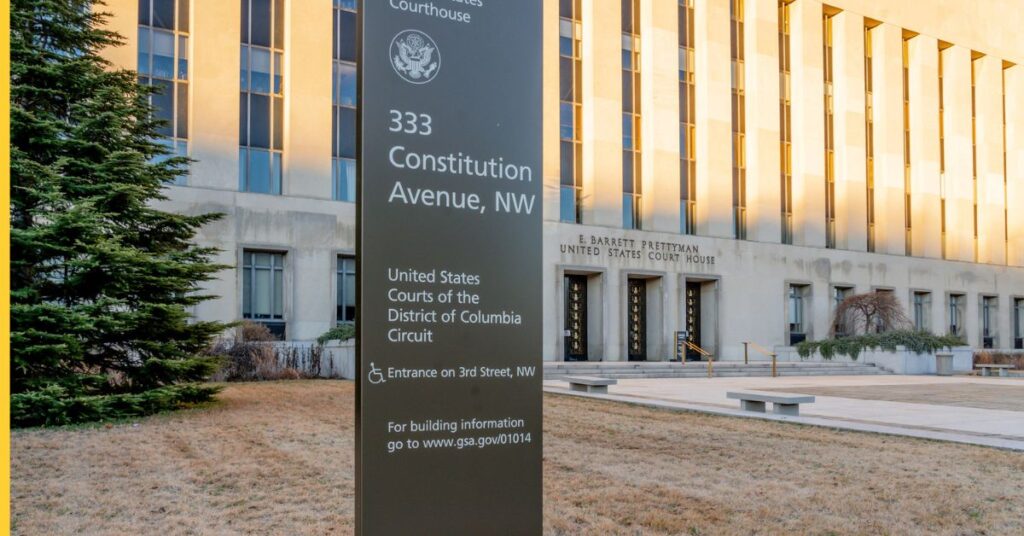
Two law firms asked a DC federal court to block ‘retaliatory’ Canadian arbitration claims tabled by two sweeps casinos against their clients.
Two law firms have asked a DC federal court to block ‘retaliatory’ Canadian arbitration claims, tabled by two sweepstakes casinos against their clients.
In the latest of many legal cases concerning the sweepstakes casino industry, the operators of Zula and Sportzino brought a lawsuit against two plaintiff law firms last month.
In the suit, the sweeps casino operators accused Kind Law and Ben Travis Law of using misleading social media ads to enlist their users into filing meritless arbitration claims against it.
The companies said the firms had aimed to coerce settlement due to the high administrational fees claimed by the American Arbitration Association (AAA), amounting to $1.5m for 966 clients at the time the complaint was filed.
The complaint read: “As Plaintiffs’ preliminary investigation has made clear, however, hundreds of these Claimants never used Zula or Sportzino’s websites, never accepted any form of Terms and Conditions, and are therefore not party to any agreement to arbitrate with Plaintiffs.”
Law firms accuse sweepstakes of retaliating against clients
The law firms have responded by accusing the sweeps of operating illegal gambling, and of retaliating against their clients by tabling arbitration claims of their own.
In their “frenzied” response to litigation, the firms added, the sweeps operators changed the arbitration forum to the Canada-based ADR Chambers in their Terms & Conditions.
The firm’s attorneys argued players which have signed up to their lawsuit are now facing “retaliatory” arbitration claims against them in the new setting.
This has reportedly involved the sweeps seeking monetary compensation from their former users for filing the claims in the AAA, as opposed to ADR Chambers forum as stated in the T&Cs.
The filing said: “The New Terms are unenforceable, and the Retaliatory Arbitrations should not have been brought.”
The attorneys highlighted a looming 15-day deadline for the claimants to appear in the arbitrations and the “unethical behaviour” directed at their former users as reasons the court should impose a temporary injunction.
The common use of arbitration agreements by sweeps operators was highlighted by gaming attorney Daniel Wallach as one factor that could delay litigation against them in a recent interview with NEXT.io.
Prominent operator in the space, VGW, brought proceedings against a former player in July for taking part in a class action lawsuit against it, in violation of their arbitration agreement.